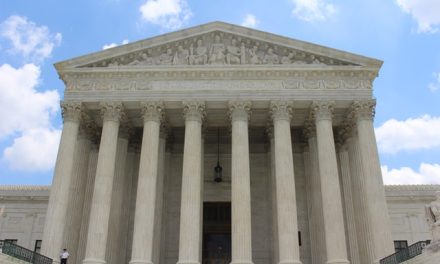

On Friday, February 27, 2026, the Supreme Court of Georgia issued an order regarding the case of Judge Shermela J. Williams, who recently resigned from her position as a Fulton County Superior Court Judge. This order comes in the wake of a recommendation from the Georgia Judicial Qualifications Commission (JQC) for her removal.
The Supreme Court’s order directs the involved parties to submit briefs addressing key issues arising from Judge Williams’ resignation. The first issue concerns the court’s remaining jurisdiction over the matter, considering her departure. The court references the Georgia Constitution of 1983, Art. VI, Sec. VII, Par. VII(a), which states that a judge may be removed, suspended, or otherwise disciplined. The court also cites Inquiry Concerning Judge Coomer, 315 Ga. 841, 854 & n.10 (2023), emphasizing that the JQC’s rules are procedural and govern the commission, but do not dictate what conduct is proscribed.
The second issue the Supreme Court seeks to address is whether a permanent prohibition on holding judicial office remains a possible sanction, and if the matter is moot given the resignation. The court cites Inquiry Concerning Judge Johnson, 316 Ga. 876, 878–79 (2023) and Inquiry Concerning Judge Crawford, 310 Ga. 403, 407-11 (2020) (Blackwell, J., concurring) as relevant precedent.
Judge Williams’ resignation followed a recommendation from the JQC, which cited dishonest testimony related to allegations of misconduct. These allegations included the illegal arrest and false imprisonment of a witness. Judge Williams expressed in a letter to Governor Brian Kemp that her resignation was bittersweet, but highlighted her dedication to upholding the law during her five years on the bench.
Her resignation occurred amidst a pending disciplinary case before the Georgia Supreme Court and a separate lawsuit filed by Molly Riley Dennis, who accused Judge Williams of violating her constitutional rights by improperly jailing her during divorce proceedings involving Dennis’ parents. Judge Williams had attempted to dismiss the lawsuit, claiming judicial immunity.
Courtney Veal, the director of the JQC, stated that Judge Williams’ resignation was an attempt to evade accountability. Veal emphasized that the disciplinary case is still pending and the Investigative Panel is considering further action.
Jamala S. McFadden, Judge Williams’ counsel, defended her client’s reputation as a community leader dedicated to fairness, integrity, and justice. McFadden acknowledged Judge Williams’ concerns about the fairness of the JQC process but stated that she made the difficult decision to resign.
The JQC initially charged Judge Williams in 2024 with multiple counts of misconduct, including intervening in a legal proceeding on behalf of her uncle, improperly delaying cases, and illegally detaining a witness during a divorce hearing. Additional allegations included improper communication with a sorority sister regarding preferential scheduling in a child custody case, followed by a threat to take away her child after a recusal motion was filed.
The Supreme Court has instructed the parties involved to comply with word count limitations in the court’s Rule 20(1) and file their briefs within 30 days of the order.
A copy of the original filing can be found here.