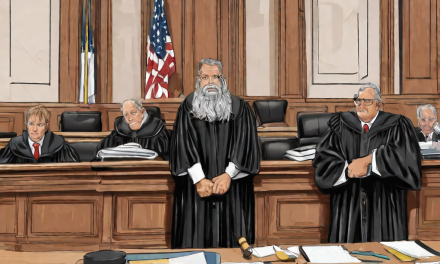

As the gavel echoes through the hallowed halls of justice, an upheaval brews in the American judiciary. President Biden’s audacious plan to impose term limits on Supreme Court justices and enforce a code of ethics resonates like a thunderclap. The proposal seeks to cap the tenures of these black-robed titans at 18 years, ostensibly to infuse predictability and curb the lifelong grip any president might hold over the Court. Yet, such a seismic shift demands a constitutional amendment—a Herculean task in the modern political era, where consensus is as rare as a unicorn sighting.
Across the country in New Hampshire, the state Supreme Court is shrouded in mystery. Justice Anna Barbara Hantz Marconi is abruptly placed on paid leave, her absence as puzzling as a cryptic riddle. With no explanation offered, the judicial fog thickens, casting long shadows over her and her husband, Geno Marconi, who himself is on an enigmatic leave from his role at the Division of Ports and Harbors. The silence fuels the whispering winds of speculation, drawing curious eyes to the cloaked corridors of power.
Meanwhile, in Idaho, the tale of Thomas Creech unfurls with dramatic tension. Creech, an inmate on death row, contends that Judge Amanda Brailsford should have stepped aside from his execution case due to her past ties with the Ada County Prosecutor’s Office. The courtroom drama thickens as Creech’s lawyers argue that Brailsford’s impartiality is compromised, a claim denied by the judge with a wave of her gavel. The plot twists with allegations of prosecutorial misconduct, painting a picture as intricate as a legal thriller.
In San Jose, the Police Officers’ Association pens a fierce letter, calling for the removal of Judge Hector Ramon from criminal cases. They accuse him of endangering public safety by releasing suspects deemed too dangerous to roam free. The letter, a bold stroke in the game of judicial chess, reflects the tension between law enforcement’s call for stringent measures and the judiciary’s balancing act of rights and safety.
Finally, in Ohio, the Supreme Court delivered a decisive blow to inmate Prince Charles Cotten Sr.’s legal gambit. Cotten, seeking relief from court-imposed fees, finds his writ of mandamus dismissed, his claims evaporating like morning mist. The Court’s ruling underscores the labyrinthine path of legal appeals, leaving Cotten to navigate the treacherous waters of the appellate process.
As these narratives intertwine, they weave a tapestry of legal intrigue, where power, ethics, and justice collide in a perpetual dance, reshaping the contours of American jurisprudence.
Disclaimer: The news on Abusive Discretion is from the public record. Editorials and opinions are light-hearted opinions about very serious topics not stated as statements of fact but rather satirical and opinion based on the information that is linked above.