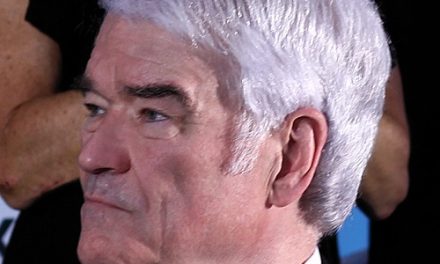
On Tuesday, December 10, 2024, former federal judge Michael Burrage – on behalf of two judicial ethics advocates: Professor Robert Prentice of the University of Texas and international judicial reformer Edward “Coach” Weinhaus – filed a motion in the United States Court of Appeals for the Fifth Circuit to allow submission of an amicus curiae brief in the case of Dondero v. Jernigan. The case has colloquially been called the “Hedge Fund Judge” case. Coach Weinhaus has been called “America’s most aggressive judicial reformer” and is also the publisher of AbusiveDiscretion.
In a recent ruling by a panel the Fifth Circuit, the court affirmed the denial of a petition for mandamus filed by James Dondero and several affiliated entities against Chief Judge Stacey G. Jernigan of the United States Bankruptcy Court for the Northern District of Texas. The case arose from ongoing bankruptcy proceedings involving Highland Capital Management, L.P., which Dondero previously led as CEO.
The appeal by the Dondero Parties centered on claims of bias against Chief Judge Jernigan, arguing that her previous involvement in related bankruptcy cases necessitated her recusal. However, the court determined that they failed to provide clear evidence of bias, which is essential for mandamus relief.
The Dondero Parties contested several of Jernigan’s decisions, citing her comments as indicative of bias. The panel clarified that critical remarks or rulings do not constitute personal bias and emphasized that bias must stem from personal feelings rather than judicial actions. Furthermore, the panel found no sufficient evidence to support the claims of bias, stating that the judge’s comments were relevant to her responsibilities and her decisions were evidence-based.
The panel dismissed allegations of bias related to the judge’s fictional novels, asserting that these works were not pertinent to the case.
The Appellants filed a petition for rehearing en banc last month. On December 16, the court issued a directive requiring a response to the petition by December 26. On the same day, the court granted Weinhaus’ and Prentice’s motion, allowing Burrage and the judicial ethics advocates to submit their amicus curiae brief.
The amicus brief addresses concerns regarding judicial impartiality related to Judge Jernigan’s novels showing a disdain for the hedge fund industry.
The brief cites various court cases highlighting the necessity for judges to avoid even the appearance of bias.
“Judge Jernigan’s extrajudicial writings and public statements have created precisely the type of appearance of bias that the Canons were designed to prevent. As detailed in the record, these materials convey strong, negative views about hedge funds and their managers, a class of litigants that regularly appears in her court.”
It discusses Judge Jernigan’s extrajudicial conduct, particularly her novels that portray hedge funds negatively. These writings raise questions about her impartiality in cases involving hedge funds, as they reflect strong personal opinions that could undermine public confidence in her judicial role.
“Yet Judge Jernigan’s marketing and promotion of her novels, 1 which are tied to her judicial experiences, blur the line between her judicial role and her personal endeavors. The use of her judicial status to advance the visibility and sales of her novels violates this principle, further eroding public confidence in her impartiality.”
Coach Weinhaus and Professor Prentice argue that Judge Jernigan should recuse herself from cases involving hedge funds due to ethical concerns stemming from her novels, which may create an appearance of bias and jeopardize the integrity of the judicial process.
“Judge Jernigan’s novels, which fictionalize themes related to her judicial role, raise concerns about bias. As Georgetown Law Professor Adam Levitin observed, such writings risk creating perceptions of partiality.”
Coach’s international judicial reform work includes serving as the Special Media Advisor to the Chair of the Knesset’s Constitution, Law and Justice Committee during Israel’s tumultuous 2023 judicial reform debates, penning two letters to the Wall Street Journal, and the definitive piece for the American Greatness audience. His work in the United States has been no less controversial including his founding work with the Legal Accountability Project and ChlidrenOfTheCourt, drawing the ire of judges opposed to judicial accountability. His dismissed lawsuit against the Illinois Judges Association is pending appeal before the Seventh Circuit for the limited issue of Rooker-Feldman subject matter jurisdiction. He was quoted yesterday by an Illinois-based legal journal about his work fixing Cook County’s’ “hostage” process in the nation’s second largest domestic relations division.
Professor Prentice has a special focus on the psychology of moral decision-making at the McCombs School of Business. Coach refused comment for this article.