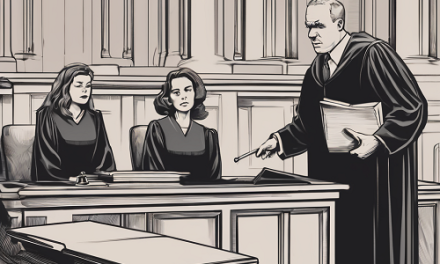
On Friday, December 12, 2025, TribLive reported that a dispute erupted in Allegheny County’s court system involving Common Pleas Judge Beth A. Lazzara and the Office of the Public Defender. The conflict centers on Lazzara’s decision to bar Managing Attorney Samantha Sridaran from appearing before her in Competency Court, a specialized court Sridaran helped create, due to alleged unethical behavior. Legal experts are questioning the judge’s authority to take such action.
The disagreement raises fundamental questions about the scope of judicial authority, specifically a judge’s power to control which attorneys appear in their courtroom, especially those facing misconduct allegations. According to legal experts, a judge’s discretion is limited in this area. David A. Harris, a criminal law professor at the University of Pittsburgh, stated that judges cannot arbitrarily refuse representation by an attorney in good standing.
The controversy began last month when Lazzara, who oversees Competency Court, prohibited Sridaran from handling cases in her courtroom. The Public Defender’s Office responded by requesting Lazzara recuse herself from competency cases involving their lawyers. A complaint has also been filed against Lazzara with the Judicial Conduct Board. Lazzara has refused to step down, resulting in a standstill. Judge Lazzara and court administration have declined to comment on the situation. Interim Chief Public Defender Andy Howard also declined to answer specific questions but stated that his office only allows licensed attorneys in good standing to practice in court.
Experts contend that a judge lacks the authority to ban a licensed attorney from their courtroom under these circumstances. They emphasize that a defendant’s right to representation supersedes any personal dispute between a lawyer and a judge. Bruce Antkowiak, a former federal prosecutor and criminal law professor at Saint Vincent College, acknowledged judges have broad discretion in managing their courtrooms but cannot arbitrarily choose which attorneys are allowed to appear.
Allegheny County established its Competency Court in July, assigning Lazzara to preside over commitment hearings, placements to Torrance State Hospital, competency determinations, bail-related proceedings, and review hearings. Lazzara has served on the bench since 2005 and has presided over Mental Health Court since 2012.
The conflict stems from Lazzara’s distrust of Sridaran, believing her conduct was unethical in a prior criminal case involving Isreal Moseby. Sridaran, a 2018 graduate of Case Western Reserve Law School, supervises the Special Representation Unit, which defends clients in competency matters.
Sridaran faced criticism earlier in the year for alleged judge-shopping and manipulating the legal system while representing Moseby, who was accused of stabbing a woman in 2023. Sridaran’s efforts to have Moseby released from jail were rejected multiple times by a criminal court judge. However, she appealed to a judge in the Orphans’ Court division, who granted her motion to release Moseby on bond in December 2024. Moseby subsequently absconded from an unsecured facility and allegedly fatally shot a woman in June.
Lazzara cited the Moseby case as the reason for barring Sridaran from Competency Court until state disciplinary allegations against her are resolved.
Court records indicate the conflict began in October when Sridaran returned from maternity leave and appeared before Lazzara. Lazzara requested that Howard assign different lawyers to her courtroom and later texted Howard stating that she could not trust Sridaran. Howard filed a recusal motion, calling Sridaran “integral” to representing clients in competency cases. Lazzara defended her decision by referencing the Moseby case and stating Sridaran could practice law, just not in her courtroom.
The Public Defender’s Office subsequently filed motions to withdraw from six pending competency cases, suggesting the Office of Conflict Counsel take over. Brandon Herring, who heads the conflict counsel office, criticized the move, stating his office was not prepared to handle an entire new docket and accused the Public Defender’s Office of client abandonment. Lazzara denied the motion.
Source: TribLive