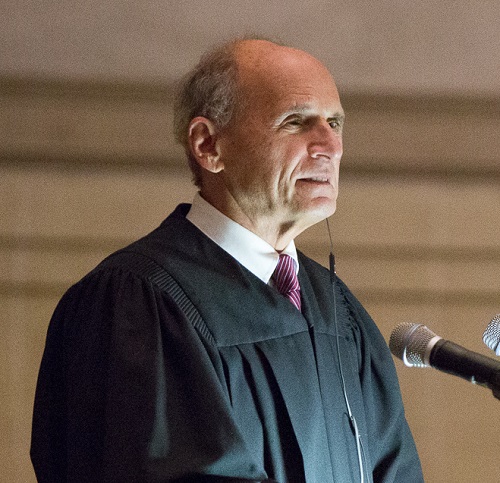
On Wednesday, December 11, 2024, The Washington Post published an opinion article written by David S. Tatel, a retired judge from the U.S. Court of Appeals for the District of Columbia Circuit. The article addresses the critical issue of judicial recusal and the importance of maintaining public trust in the judiciary.
Tatel emphasizes that public trust is essential for the functioning of American democracy, particularly because federal judges are appointed for life and are not subject to electoral accountability like members of the executive and legislative branches. He asserts that even a perception of bias can undermine the integrity of the judiciary.
In recent months, there has been a growing call for reforms aimed at increasing the transparency and accountability of the judicial system. Discussions have focused on various proposals, including mandatory codes of conduct and term limits for judges. A significant area of concern is the process of recusal—when a judge withdraws from a case to avoid conflicts of interest or to maintain the appearance of impartiality.
Tatel highlights the legal framework governing recusal, specifically 28 U.S.C. Section 455(a), which mandates that judges disqualify themselves if their impartiality could reasonably be questioned. He points out that while the statute requires judges to recuse themselves in questionable situations, the decision ultimately rests with the judges themselves, as there is no external enforcement mechanism.
To navigate these situations, Tatel adopted a “five-minute rule” during his judicial tenure. This guideline stipulated that if he had to deliberate for more than five minutes on whether his participation in a case could be perceived as biased, he would choose to recuse himself. He explains that this approach was designed to err on the side of caution, ensuring that even the appearance of bias was avoided.
Tatel shares a personal experience that tested his commitment to this rule. He recused himself from a case concerning the accessibility of U.S. currency for the visually impaired, a matter that resonated with him as a blind individual. Despite believing he could set aside his personal views, he recognized the potential for public perception to influence trust in the judiciary. His concern was that a ruling in favor of more accessible currency could be misinterpreted as self-serving.
Although his colleagues encouraged him to remain on the case, Tatel ultimately decided to recuse himself to preserve the integrity of the court and avoid any appearance of impropriety. He notes that while recusal is relatively straightforward for appellate judges, it poses more significant challenges for Supreme Court justices, who cannot be easily replaced. This complexity underscores the need for justices to carefully consider their decisions regarding recusal.
Tatel concludes that trust in the judiciary cannot be mandated through legislation; rather, it is cultivated through sound judicial decisions that adhere to legal principles. He advocates for judges to prioritize the appearance of impartiality, particularly in moments of uncertainty. By choosing recusal when necessary, judges can help reinforce public confidence in the judicial system and its commitment to justice.
Source: The Washington Post