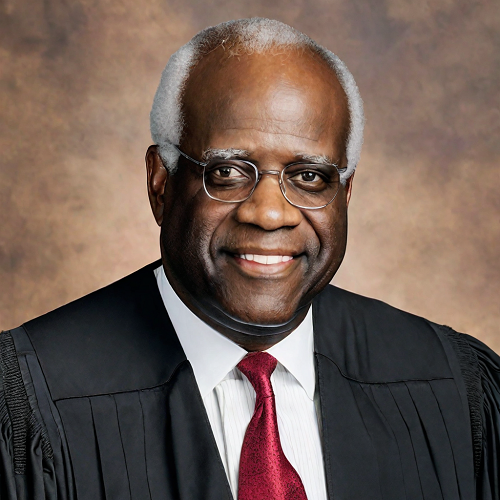
On Thursday, March 13, 2025, Bloomberg Law reported that Justice Clarence Thomas’ dissent in a case involving a Christian firefighter may indicate the U.S. Supreme Court’s willingness to revisit a 52-year-old framework used in workplace discrimination lawsuits. The dissent highlights concerns surrounding the McDonnell Douglas Corp. v. Green burden-shifting framework, which has been in place since 1973.
The McDonnell Douglas framework was established to assist lower courts in evaluating circumstantial evidence in discrimination cases. However, legal experts have pointed out that its application has become complicated over the years. The framework has led to confusion in lower courts, resulting in inconsistent interpretations and applications, which Thomas addressed in his dissent.
Thomas, joined by Justice Neil Gorsuch, expressed his concerns in the dissent opposing the denial of the Supreme Court’s review of Hittle v. City of Stockton. He pointed out several pitfalls associated with the McDonnell Douglas framework, particularly its application during the summary judgment stage. The justices have not yet clarified whether this burden-shifting scheme should be employed at this stage of proceedings, and Thomas indicated that it was originally intended merely for organizing and analyzing evidence.
Prof. Sandra Sperino from the University of Missouri School of Law noted that Thomas’ dissent suggests the Supreme Court may be more open to hearing cases that challenge aspects of the McDonnell Douglas framework. She and other legal professionals believe that Hittle might not have been the ideal case for such review.
In his dissent, Thomas referred to troubling outcomes produced by the McDonnell Douglas framework, a sentiment echoed by other justices. He cited opinions from Gorsuch and Justice Brett Kavanaugh, both of whom have previously expressed dissatisfaction with the framework during their time as federal circuit judges. Thomas emphasized the confusion stemming from the three-step process inherent in the framework, which requires a worker without direct proof of bias to establish a prima facie case using circumstantial evidence. This then shifts the burden to the employer to provide a nondiscriminatory justification for its actions, after which the worker must show that this justification is a pretext.
The firefighter involved in the Hittle case argued that the burden-shifting scheme conflicts with Title VII of the Civil Rights Act of 1964. Attorney Alan L. Rupe suggested that this perspective would resonate with Gorsuch. Rupe’s partner, Jeremy K. Schrag, pointed to the Supreme Court’s decision in Bostock v. Clayton County, Georgia, as evidence of Gorsuch’s commitment to adhering to statutory text.
Additionally, Kavanaugh previously stated in Brady v. Office of the Sergeant at Arms that courts should bypass the prima facie case if an employer provides a non-biased reason and focus instead on whether there is sufficient evidence of discrimination for a trial.
The inconsistency in how the McDonnell Douglas framework is applied has led to splits among circuits, resulting in less uniformity in legal outcomes. Legal analysts noted that the Supreme Court is often motivated to resolve such conflicts.
Although there is speculation about whether a majority of the justices would be inclined to revisit the McDonnell Douglas framework, experts agree that the Hittle case is not a straightforward vehicle for review. The case encompasses multiple causation theories, and legal professionals believe the Court may seek a case with more typical facts.
While there is discontent regarding the McDonnell Douglas framework, questions remain about what alternative might be proposed. Legal experts have pointed out that the framework is not the primary reason many job bias claims fail to reach trial. Instead, various doctrines developed by lower courts often impede such claims. These doctrines can disadvantage employees, particularly when the same individual is involved in both hiring and firing decisions.
Some existing legal rules may contradict the principles of McDonnell Douglas, such as a doctrine that allows an employer to avoid liability if it genuinely believes in its nondiscriminatory rationale, even if that rationale is mistaken. This creates tension with the pretext analysis, which scrutinizes the truthfulness of the employer’s justification.
As discussions around the McDonnell Douglas framework continue, legal experts suggest that the Supreme Court may consider revising its technical aspects rather than completely overhauling it. The pretext step, for example, is viewed as valuable for assessing employers’ explanations, and it might be retained in any future revisions.
Overall, while the dissent from Thomas signals a potential appetite for clarifying the application of McDonnell Douglas, the broader implications of any changes remain uncertain.
Source: Bloomberg Law