
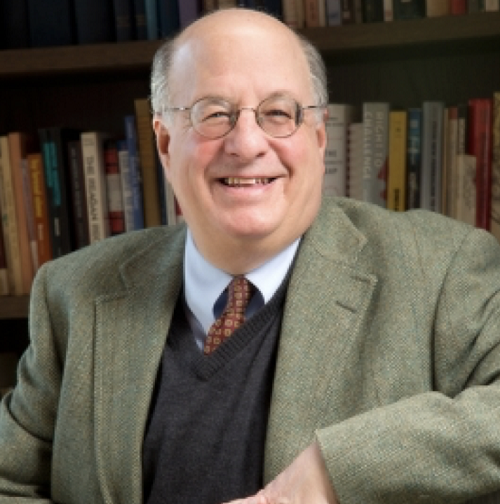
On Tuesday, November 11, 2025, Deseret News reported that Mark L. Wolf, a U.S. district judge in Massachusetts appointed by President Ronald Reagan in 1985, resigned from his position and published a scathing letter in The Atlantic, citing concerns over the Trump administration’s threat to democracy. Wolf, who served on the federal bench for 40 years, including six as chief judge, accused the administration of corruption, politicizing the Department of Justice, and using the law for partisan purposes.
In his letter, Wolf articulated that the White House’s actions against the rule of law were deeply disturbing, making his silence intolerable. He alleged that the Trump administration had turned the Department of Justice into a tool for targeting political adversaries while shielding friends and donors from investigation and prosecution. He drew parallels to Robert F. Kennedy’s 1966 speech about apartheid South Africa, emphasizing the power of individual actions against injustice to create significant change.
A White House spokesperson responded to Wolf’s accusations in The New York Times, stating that judges who inject personal agendas into the law have no place on the bench and suggested that dissenting judges should resign before voicing their complaints.
Wolf supported his accusations by pointing to instances where business deals and partnerships involving the Trump family appeared to coincide with individuals and groups gaining direct access to the White House or receiving presidential pardons. He specifically mentioned the case of Justin Sun, a Chinese national who donated over $10 million to President Trump’s crypto dinner. Wolf noted that while it is illegal for non-U.S. citizens to donate to politicians, a fraud suit against Sun was paused pending settlement negotiations following the event.
The former judge also highlighted the removal of 18 inspectors general from various federal agencies tasked with investigating corruption and misconduct, as well as the elimination of the FBI’s public corruption section and the reduction of staff in the DOJ’s public integrity division from 30 lawyers to five.
Wolf expressed concern over Trump’s efforts to indict political opponents, including New York Attorney General Letitia James, who secured a fraud conviction against Trump. He also mentioned Trump’s urging of U.S. Attorney General Pam Bondi to indict former FBI director James Comey and Rep. Adam Schiff, despite other federal lawyers finding insufficient evidence to support such actions.
He acknowledged the criticism against James, with some suggesting that her pursuit of Trump over the years was politically motivated, citing the numerous lawsuits she filed against Trump and his administration.
Wolf also included judges who ruled against the president’s executive orders in his list of those antagonized by the Trump administration, noting that some judicial orders were ignored, while others led to calls for the judges’ impeachment.
Drawing on his experience working in the Department of Justice following the Watergate scandal, Wolf compared the Trump administration to the Nixon era, stating that Trump was doing routinely and overtly what Nixon did episodically and covertly.
Wolf began his career in the aftermath of Nixon’s resignation and the Watergate scandal, during which one of Nixon’s attorneys general went to prison, and another was convicted of contempt. He was hired by the DOJ during Gerald Ford’s presidency and organized the induction ceremony for Attorney General Edward Levi, who emphasized the importance of ensuring that the law is not used for partisan purposes.
Before becoming a federal judge, Wolf was involved in successful convictions in over 40 corruption charges and participated in the James “Whitey” Bulger trial. He stated that he felt compelled to resign due to ethical rules that restrict judges’ public statements, believing that combating the current threat to democracy and the rule of law is of utmost importance.
Source: Deseret News


