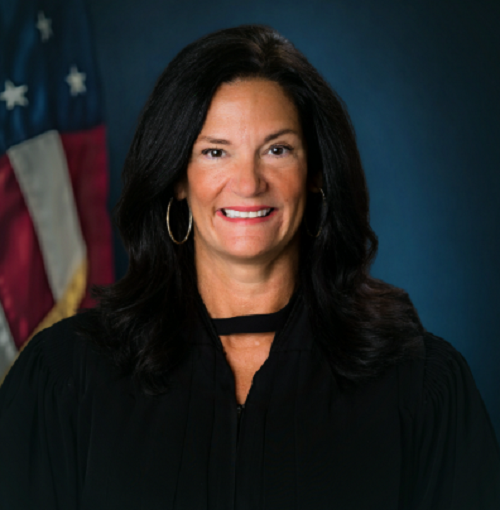
On Wednesday, January 14, 2026, the Michigan Judicial Tenure Commission issued an amended scheduling order, setting the dates for the trial of Judge Kirsten Nielsen Hartig of the 52nd District Court, Division 4, in Troy, Michigan. The trial is scheduled to begin on February 2, 2026.
The scheduling order comes amidst an amended complaint filed against Hartig, which raises serious questions about her mental fitness to continue serving on the bench and details multiple instances of alleged misconduct.
According to the amended scheduling order, on February 2, counsel will report to chambers at 10:00 AM to discuss trial logistics and any pretrial matters. Opening statements are scheduled to begin at 1:00 PM on the same day, with witness testimony commencing at 9:00 AM on February 3.
The amended complaint, filed on January 9, 2026, outlines a series of accusations against Hartig. One of the primary concerns involves Hartig’s alleged refusal to provide the Commission with a court-ordered psychological evaluation report. The Commission had directed Hartig to undergo this evaluation in April 2024 as part of an investigation into her conduct. The evaluation, conducted by All Points North, was completed in June 2024, but the report was allegedly withheld from the Commission until December 5, 2024, despite repeated requests and deadline extensions. The report purportedly deemed Hartig “unsafe to practice” due to disruptive behavior and personality dysfunction.
The second count accuses Hartig of making false statements to the Commission in response to a formal inquiry. Specifically, the complaint alleges that Hartig falsely stated that Dana O’Neal was fired for incompetence by Honorable Joseph Fabrizio and that her staff was not interviewed as part of the investigation. The Commission claims Hartig knew these statements were false.
Count three focuses on Hartig’s alleged mistreatment and abuse of court employees and obstruction of the administration of her court. The complaint details numerous incidents where Hartig purportedly attempted to assert control over departments and employees over whom she had no authority, treated court employees and administrators discourteously, and created a climate of fear among court personnel.
The fourth count accuses Hartig of improperly dismissing criminal cases, specifically citing instances where she allegedly dismissed cases with prejudice to punish the prosecution rather than on the merits of the case. The complaint alleges that Hartig did not confine her state law docket to state law days, and dismissed cases with prejudice when prosecutors requested adjournments due to the COVID-19 pandemic.
The most serious allegations are contained in count five, which asserts that Hartig suffers from a mental disability that prevents her from performing her judicial duties. The complaint cites the results of two psychological evaluations, one conducted at Bright Pine Behavioral Health in September 2024 and another by Dr. Michael Lawrence in December 2025.
The Bright Pine evaluation reportedly showed significant challenges with visual learning and recall, encoding and memorizing facts, shifting focus, and retaining important details. The evaluation by Dr. Lawrence allegedly revealed low average performance in alternating attention, mental flexibility, and sequencing, as well as abnormal initial learning for visual information and difficulties with executive function and language-based measures.
Dr. Lawrence’s evaluation concluded that Hartig’s neuropsychological profile is abnormal and consistent with a clinical diagnosis of Mild Neurocognitive Disorder, raising concern for an emerging dementia-type syndrome.
The Commission argues that these cognitive impairments prevent Hartig from effectively reading, analyzing, and recalling facts, applying law to facts, making credibility determinations, and writing coherent opinions and orders.
A copy of the original filing can be found here.