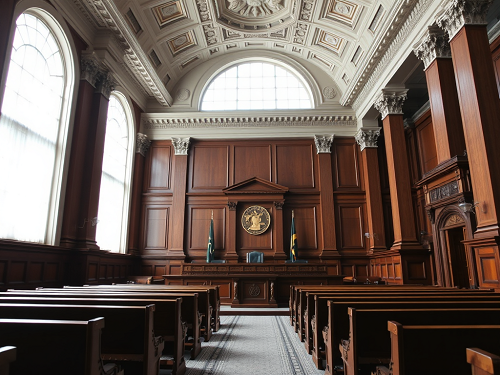
On Tuesday, July 8, 2025, Bloomberg Law reported that the Michigan Supreme Court received significant opposition to its proposed changes to conduct rules aimed at addressing bias among judges and lawyers.
The proposal, which aligns with guidelines from the American Bar Association, seeks to prohibit expressions of bias or prejudice through words or actions based on characteristics such as race, sex, sexual orientation, gender identity, religion, ethnicity, disability, physical appearance, familial status, political affiliation, and socioeconomic status. The court collected 57 letters from early May to July 1, 2025, during the public comment period, with the majority opposing the changes.
Opponents, including the State Bar of Michigan’s Religious Liberty Law Section, argued that existing conduct rules already require judges and lawyers to treat everyone with courtesy and respect, rendering the proposal unnecessary and potentially unconstitutional.
The Virginia-based Christian Legal Society labeled the proposal a “speech code,” warning that it could lead to disciplinary action against attorneys, such as those in the Legislature, for decisions influenced by political affiliation. David Nammo, the society’s CEO, cautioned that adopting the rule prematurely could cause irreversible harm to Michigan attorneys, while rejecting it would allow for future reconsideration.
The Michigan Judges Association and the Wayne Circuit Court, the state’s largest trial court, also voiced opposition. Berrien Circuit Judge Charles T. LaSata, representing the judges’ association, noted that the proposal lacks an intent requirement, potentially allowing subjective interpretations of harassment to dictate violations.
“There is no intent requirement in the proposed rule change, effectively making the subjective listener the arbiter of whether the actions constitute harassment,” LaSata said. “Arguably, nearly every Defendant in an adversary proceeding believes that they are being harassed in some manner.”
Additionally, two former chairs of the State Bar’s Religious Liberty Law Section argued that including sexual orientation and gender identity in the rules could conflict with the religious beliefs of some attorneys who view gender as biologically fixed.
The Catholic Lawyers Society of Metropolitan Detroit also submitted objections, addressing their letter to U.S. Attorney General Pamela J. Bond and Harmeet K. Dhillon, head of the Justice Department’s civil rights division.
Despite the opposition, some within Michigan’s legal community supported the proposal. Michigan Court of Appeals Judge Sima G. Patel, chair of the court’s rules committee, endorsed the changes on behalf of appellate judges but recommended retaining language emphasizing respect and courtesy for all.
Similar support came from the Attorney Grievance Commission, the Attorney Discipline Board, the State Bar’s board, and the state District Judges Association.
The Michigan Supreme Court plans to hold a public hearing on the proposal at a date yet to be determined before the justices vote on its adoption. This marks the second time in recent years that the court has addressed contentious cultural issues, following a previous proposal on the use of litigants’ preferred pronouns, which drew over 400 comments and was ultimately adopted as a guideline rather than a mandate.
Source: Bloomberg Law