
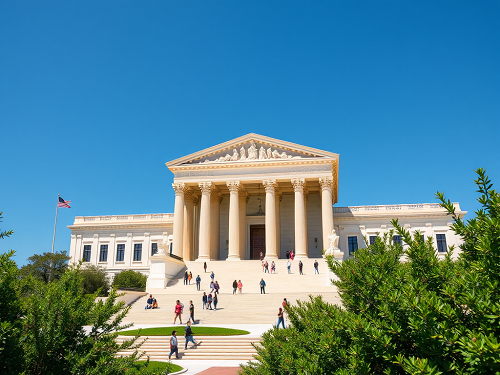
On Tuesday, March 25, 2025, RawStory reported that Justices Samuel Alito and Clarence Thomas of the U.S. Supreme Court are being urged to recuse themselves from an upcoming case due to alleged conflicts of interest linked to their relationships with “conservative kingpin” Leonard Leo. The watchdog group Accountable.US has raised concerns about the potential implications of this case, which could significantly impact federal governance.
The case in question, Federal Communications Commission v. Consumers’ Research, involves a challenge to the constitutionality of the FCC’s Universal Service Fund program by a right-wing organization. A recent report highlighted that should the Supreme Court side with the federal appeals court that previously struck down this program, it could result in one of the most extensive judicial overreaches in U.S. history. Critics argue that such a ruling would restrict the federal government’s ability to effectively manage essential programs.
Accountable.US emphasized the serious ramifications of reviving the nondelegation doctrine, which has been largely dormant for nearly a century. This legal principle would prevent Congress from delegating its legislative authority to federal agencies, thereby hindering their ability to regulate consumer protections, social security, and Medicare—especially during a period when the Trump administration has initiated cuts to federal agencies.
The report from Accountable.US specifically pointed out that Justices Alito and Thomas have close personal ties to Leonard Leo, who is a key figure in the conservative movement and significantly involved with Consumers’ Research. The watchdog noted that all six conservative justices on the Supreme Court have benefitted from Leo’s efforts in supporting their confirmations, further complicating their ability to rule impartially in this case.
Leonard Leo has maintained a long-standing relationship with Justice Thomas dating back to the early 1990s when Leo was a law clerk in Washington, D.C. Over the years, they have traveled together, and Thomas has been involved in Leo’s family life, even serving as the godfather to one of Leo’s daughters. Additionally, Thomas’s wife, Ginni, has previously expressed admiration for Leo, referring to him as a “hero” and “mentor.” The two have collaborated on various projects that have influenced conservative political strategies.
Justice Alito’s connections with Leo are also notable. The two have shared personal outings, including a private fishing trip to Alaska, which Alito did not disclose at the time. Leo’s organization, the Federalist Society, has sponsored multiple overseas trips for Alito, where Leo was often present.
Caroline Ciccone, president of Accountable.US, stated that the integrity of the legal system is jeopardized when justices have close relationships with influential individuals like Leonard Leo. She emphasized the importance of maintaining public trust in the Supreme Court, which has already been strained due to perceived impropriety among justices.
In addition to the report, Accountable.US, along with two other organizations, Take Back the Court and United for Democracy, formally requested the recusal of Justices Alito and Thomas in a letter to Chief Justice John Roberts. This request comes amidst growing concerns over corruption within the Supreme Court, particularly related to its conservative justices and their associations with wealthy donors and special interests.
Meagan Hatcher-Mays, a senior adviser at United for Democracy, remarked on the troubling nature of the relationships between justices and powerful billionaires, especially when the justices were hearing cases that directly affected the interests of those same individuals. She asserted that the ongoing connections between Justices Thomas and Alito, Leonard Leo, and Consumers’ Research create a clear appearance of impropriety, underscoring the need for their immediate recusal from the case.
As the Supreme Court prepares to hear arguments, the implications of this case and the actions of Justices Alito and Thomas may further influence public perception of the Court’s integrity and its ability to function free from external influences.
Source: RawStory


