
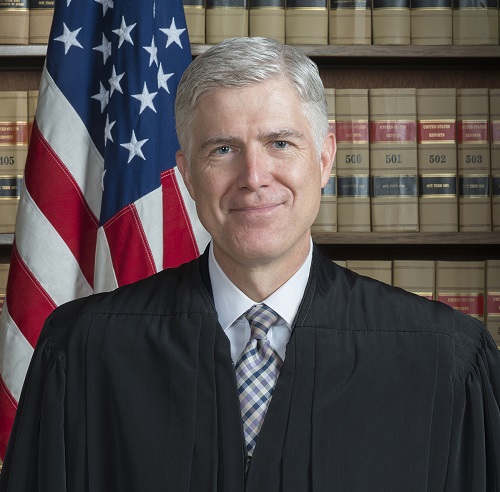
On Monday, October 28, 2024, Steven Lubet, the Williams Memorial Professor Emeritus at the Northwestern University Pritzker School of Law, published an article on political news website The Hill, discussing the implications of Justice Neil Gorsuch’s recusal in the case of Richard Glossip. The article raises concerns over the potential consequences of Gorsuch’s absence from the U.S. Supreme Court as it deliberates Glossip’s appeal regarding his conviction for a 1997 murder in Oklahoma City.
Glossip, who has been sentenced to death twice, has consistently maintained his innocence, and his case is marred by significant doubts about his guilt. Currently, Glossip’s appeal is before the Supreme Court, where the court’s recusal rules may play a critical role in determining the outcome. The Oklahoma Attorney General, Gentner Drummond, has joined Glossip’s defense team, asserting that vital exculpatory evidence was improperly withheld during previous trials.
Despite Drummond’s intervention, the Oklahoma courts dismissed Glossip’s petition for a new trial. The Supreme Court appointed an amicus curiae to support the conviction, and when Glossip’s case was considered on October 9, only eight justices were present due to Gorsuch’s recusal. The specific reasons for Gorsuch’s recusal were not disclosed, but it is believed to stem from his previous ruling against Glossip in 2013 while he served on the U.S. Court of Appeals.
Lubet notes that the absence of Gorsuch could be detrimental to Glossip’s case, which may rely on a favorable vote from four justices who appear inclined to support the appeal. However, a reversal of the conviction requires a minimum of five votes, meaning a 4-4 split would uphold the death sentence. The article highlights the critical nature of Gorsuch’s vote, as even a slight chance of his support could significantly impact Glossip’s prospects.
In many other courts, parties can waive a judge’s disqualification if all agree, a process known as a remittal. Both federal and state laws, including those in Oklahoma, typically allow for such waivers. However, the Supreme Court’s recent Code of Conduct does not include a similar provision, raising questions about the potential implications of Gorsuch’s absence.
The article also points out that the Supreme Court’s Code of Conduct includes a “rule of necessity,” which could allow a justice to participate even if disqualified, particularly if their absence risks an unjust outcome. Lubet argues that the stakes in Glossip’s case are high, given the possibility of affirming a death sentence through an evenly divided court.
Another point raised is the disqualification rule that prevents a justice from participating if they have previously expressed an opinion on the case. Gorsuch’s earlier ruling occurred before new evidence came to light, which has led to calls for a new trial. The independent investigation commissioned by Oklahoma legislators concluded that no reasonable juror would have convicted Glossip had the new evidence been available.
Lubet emphasizes that Gorsuch’s silence regarding his recusal is notable, especially given a 2023 statement from all justices acknowledging the possibility of providing a summary explanation for recusal decisions. As it stands, Gorsuch’s recusal effectively leads to a situation where his absence may contribute to the affirmation of a death sentence without his active participation in the case’s arguments or briefs.
Source: The Hill


