
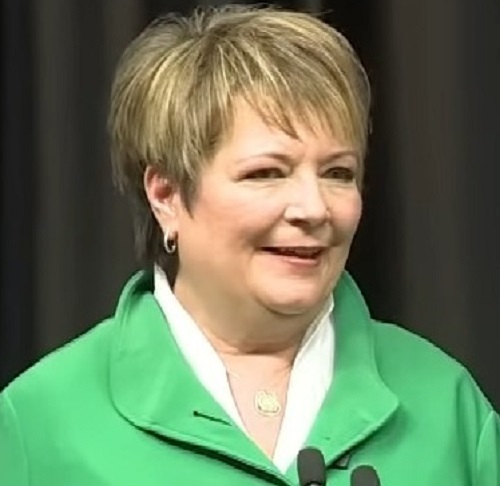
On Wednesday, January 29, 2025, AP News reported that the Republican-controlled Wisconsin Legislature requested that a liberal state Supreme Court justice step aside from a significant case concerning union rights. This case seeks to challenge a 2011 law that effectively curtailed collective bargaining rights for most state employees.
The justice in question, Janet Protasiewicz, has been asked to recuse herself from the proceedings. If she agrees to do so, the Supreme Court would be evenly split, with three liberal justices and three conservatives, potentially affecting the outcome of the case. The lawsuit has substantial implications for union rights within Wisconsin, a state that has been a focal point in the national dialogue surrounding labor issues.
Recently, a judge from Dane County Circuit Court ruled against much of the 2011 law, stating it violates equal protection provisions outlined in the Wisconsin Constitution by categorizing public employees into “general” and “public safety” classifications. This ruling would restore collective bargaining rights for all public sector workers who lost them under the law, although the decision has been put on hold while an appeal is pending.
The unions representing school workers, who initiated the lawsuit, have urged the Wisconsin Supreme Court to take up the case directly, bypassing the appeals court. Currently, the court, which has a narrow 4-3 liberal majority, has not yet made a determination on whether to accept the case.
The 2011 law, known as Act 10, was enacted amid large-scale protests, which brought national attention to Wisconsin’s labor landscape. The legislation not only led to a significant drop in union membership but also positioned then-Governor Scott Walker as a prominent figure in the national debate over union rights. The law’s introduction sparked a failed recall effort against Walker and set the stage for his unsuccessful presidential campaign in 2016.
Protasiewicz, the newest member of the Supreme Court, had campaigned in 2023 against the union law and expressed her belief that Act 10 is unconstitutional. During her campaign, she indicated that she would consider stepping aside from any case challenging the law due to her previous involvement in protests against it and her signature on a petition aimed at recalling Walker.
In a statement made on January 28, 2025, Wisconsin Senate Majority Leader Devin LeMahieu and Assembly Speaker Robin Vos emphasized that it would be “right and ethical” for Protasiewicz to recuse herself. Their motion for recusal cites her past comments regarding her union background, her stated belief that Act 10 is unconstitutional, and her opposition to Walker as grounds for her stepping aside.
Protasiewicz has opted not to comment on whether she will recuse herself, stating that the decision is entirely hers to make. Meanwhile, Jacob Karabell, an attorney representing the unions challenging the law, characterized the request for recusal as “meritless” and a tactic to stall a final ruling on the law’s constitutionality.
Potential conflicts of interest are not limited to Protasiewicz. Conservative Justice Brian Hagedorn, who served as chief legal counsel for Walker and played a role in drafting Act 10, has also been scrutinized for his connections to the case. During his successful campaign for a Supreme Court seat in 2019, Hagedorn did not commit to recusing himself should a challenge to Act 10 be presented.
While no motion has been filed requesting Hagedorn to step aside, Democratic leaders in the legislature have called for his recusal as well. If both justices were to step aside from the case, the court would lean in favor of the liberal justices, with a 3-2 majority.
Supporters of Act 10 assert that the law has given local governments greater control over their workforce and has been essential for managing costs. They argue that repealing the law would lead to financial instability for schools and local governments due to increased employee contributions for benefits. In contrast, critics of the law contend that it has negatively impacted schools and public agencies by stripping employees of their ability to negotiate collectively for fair wages and working conditions.
Source: AP News


