
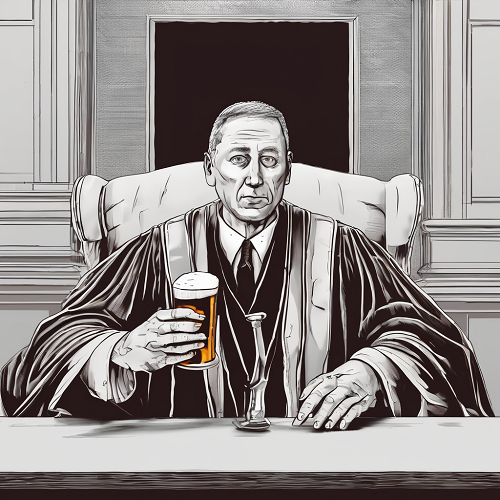
On Monday, March 4, 2024, The Denver Gazette reported that a disciplinary case against a former juvenile court judge exposed that several other judges had prior knowledge of his drinking problems but failed to report it.
The article detailed how D. Brett Woods resigned in February from his position as a juvenile court judge in Denver after being suspended pending an inquiry by the Colorado Commission on Judicial Discipline. While the full nature of the investigation was confidential, multiple sources confirmed that Woods’ use of alcohol was at the core of the disciplinary case.
Surprisingly, the article revealed that Woods’ struggles with alcohol were well known to other judges, including Colorado Supreme Court Chief Justice Brian Boatright, for years but had never been reported. It was not until a complaint was filed in the summer of 2023 by a courthouse employee that the discipline commission first learned that Boatright and others were aware of Woods’ drinking history.
When several high-ranking juvenile court employees approached Boatright, retired appellate court judge Karen Ashby, and Denver Juvenile Court Judge Laurie Clark in 2019 about intervening in Woods’ alcohol use, none of the judges reported the issue as required by the state’s Code of Judicial Conduct. While Ashby and Boatright offered their support to the employees, they did not file a report. Clark had also been made aware of concerns multiple times previously but did not take action.
The situation came to a head when Woods retaliated against a longtime courthouse manager who had spearheaded efforts to confront Woods about his drinking. Despite being made aware of the retaliation, the judges still did not alert the discipline commission as required. As a result, the manager was effectively forced to resign after over two decades of service.
The article cast doubt on Boatright’s handling of judicial disciplinary matters, as it was not the first time he was linked to allegedly slowwalking a complaint. It also explored the ongoing debate between Boatright and the discipline commission around when a judge has an obligation to report the misconduct of other judges based on firsthand or secondhand knowledge.
The exposé raised questions about accountability among the state’s judges and shed light on how knowledge of serious issues can remain hidden for years when mandatory reporting policies are not properly followed. It will likely lead to renewed scrutiny of Colorado’s judicial disciplinary processes.
Source: The Denver Gazette


